Ubuntu vs Fedora for Engineering Students: Which Should You Pick? (2026)
Ubuntu and Fedora are the two most-recommended Linux distros for engineering students, and for good reason — both are stable, well-documented, and run essentially every tool you’ll need for coursework. But they take different approaches to how software gets updated and packaged, and that difference matters more than most comparison articles let on. This guide breaks down where each one actually wins for engineering use cases, building on our broader Linux distro guide for engineering students.
Both distros will run MATLAB/Octave, Python, LaTeX, and most CAD-adjacent tools without much trouble. The real differences show up in release cycles, package management, and how much manual troubleshooting you’re willing to do in exchange for newer software.

Quick Comparison
| Factor | Ubuntu LTS | Fedora |
|---|---|---|
| Release cycle | New LTS every 2 years, supported 5 years | New release every ~6 months, supported ~13 months |
| Package manager | APT (apt install) | DNF (dnf install) |
| Software freshness | Older, more tested | Newest stable versions |
| Community support / guides | Largest — most tutorials assume Ubuntu | Strong, but fewer beginner guides |
| Best for | Set-and-forget stability through a full degree | Students who want current tooling and don’t mind occasional updates |
| Driver support | Excellent, broadest hardware coverage | Very good, especially newer hardware |
Stability: Ubuntu’s Biggest Advantage
Ubuntu LTS releases are supported for five years, which means you can install it as a freshman and never think about a major OS upgrade until you graduate. That matters more than it sounds — a mid-semester distro upgrade gone wrong is a real risk, and Ubuntu LTS is built specifically to avoid ever putting you in that position.
Fedora takes the opposite approach: a new release roughly every six months, each supported for about 13 months. This keeps your software current, but it does mean occasional upgrade cycles that require a bit of maintenance. For most students, this is a minor inconvenience — for students mid-project on a tight deadline, it’s worth planning around.
Software Availability and Package Management
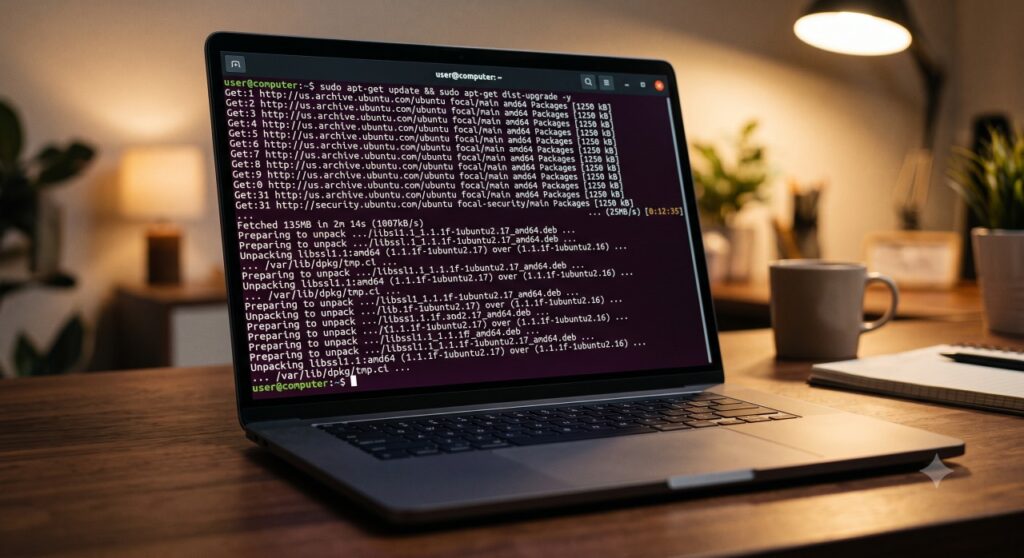
Ubuntu’s APT ecosystem is the largest in the Linux world, which means virtually every engineering tool has an Ubuntu-specific install guide somewhere online — a real advantage when you’re troubleshooting at midnight. Fedora’s DNF package manager is just as capable, but the base repositories are smaller, and you’ll occasionally need to add third-party repos (like RPM Fusion) for things like certain codecs or NVIDIA drivers.
If your coursework leans toward the newest Python versions, current GCC/Clang releases, or recent kernel features, Fedora’s faster release cycle gets you there sooner. Our full Fedora 44 setup guide covers this in detail if you want to see exactly what’s involved.

Driver and Hardware Support
Both distros have strong hardware support in 2026, but Ubuntu’s larger user base means slightly broader driver coverage for older or less common hardware. Fedora tends to ship newer kernel versions faster, which can actually give it an edge on very recent laptop hardware where Ubuntu’s more conservative kernel hasn’t caught up yet. If you’re buying a laptop specifically with this in mind, our laptop buying guide for Linux engineering students has brand-specific compatibility notes for both distros.

Which Should You Actually Pick?
- Choose Ubuntu LTS if: you want to install once and not think about your OS again until graduation, you’re newer to Linux, or your coursework relies on tools with primarily Ubuntu-based documentation.
- Choose Fedora if: you want the newest software versions, you’re comfortable with occasional maintenance, or your program uses recent hardware that benefits from a newer kernel.
For most first-time Linux users in engineering programs, Ubuntu LTS remains the lower-friction choice. Fedora is a strong pick if you’re already comfortable with Linux basics and want to stay closer to the cutting edge.